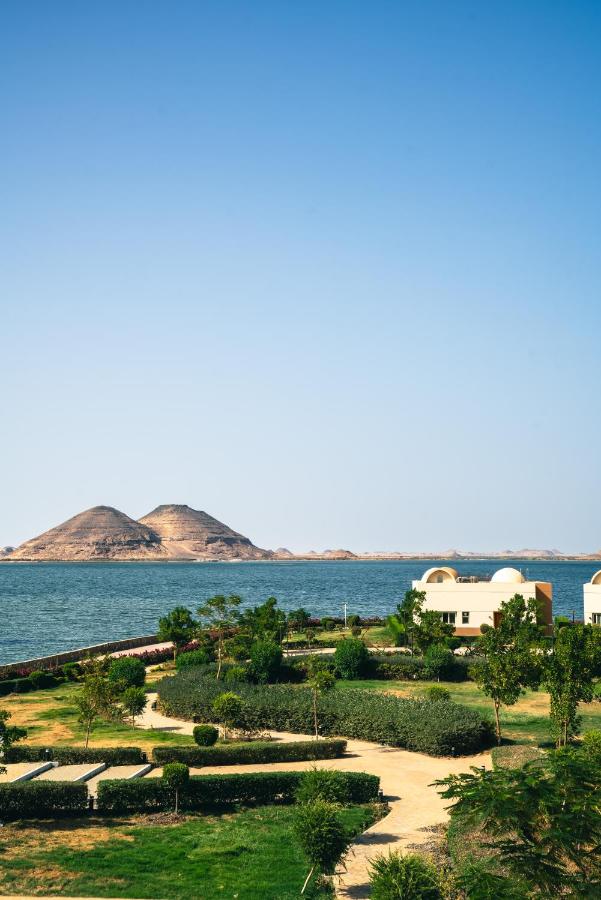
Discover Abu Simbel
The Temple of Hathor, dedicated to the goddess of love and music, is located adjacent to the Great Temple. It's smaller in size but no less impressive, with colorful reliefs and carvings that depict Hathor and other Egyptian deities.
Visiting Abu Simbel is an unforgettable experience that will transport you back in time to ancient Egypt. The temples are a testament to the incredible engineering and artistic skills of the ancient Egyptians and serve as a reminder of their rich history and culture.
If you're planning a trip to Egypt, make sure to include Abu Simbel on your itinerary. You won't regret it!
Discover Abu Simbel's Location: Country Revealed
Abu Simbel is an ancient temple complex located in the southern region of Egypt. The temple was carved out of a sandstone cliff during the reign of Pharaoh Ramesses II in the 13th century BC. The site is located close to the border with Sudan, in the region known as Nubia.
The location of Abu Simbel is within the borders of Egypt, specifically in the Aswan Governorate. Aswan is a city located in the southern region of the country, along the banks of the Nile River. The temple complex is located approximately 280 kilometers south of Aswan.
The country of Egypt is situated in the northeast corner of Africa and covers an area of approximately 1 million square kilometers. It is bordered by Libya to the west, Sudan to the south, the Red Sea to the east, and the Mediterranean Sea to the north.
Abu Simbel is one of the most famous and well-preserved ancient Egyptian temples. It was relocated in the 1960s to avoid being submerged by the rising waters of Lake Nasser, which was created by the construction of the Aswan High Dam on the Nile River.
If you are planning a trip to Egypt, a visit to Abu Simbel is highly recommended. The temple complex is a UNESCO World Heritage Site and is considered to be one of the most impressive examples of ancient Egyptian architecture and engineering.
Discover Abu Simbel: Ancient Egyptian Temple and Tourist Destination
Abu Simbel is an ancient temple located in the southern part of Egypt. The temple was built during the reign of Pharaoh Ramses II in the 13th century BC. It is considered to be one of the most impressive temples in Egypt and a popular tourist destination.
The temple was originally built to commemorate Ramses II's victory at the Battle of Kadesh. The temple consists of two main temples, the Great Temple of Ramses II and the Small Temple of Hathor. The Great Temple is the larger of the two and is dedicated to Ramses II and several Egyptian gods.
What makes Abu Simbel unique is its massive rock-cut statues of Ramses II that stand at the entrance of the temple. The four statues measure 20 meters high and are carved out of the side of a mountain. The temple also has intricate carvings and hieroglyphics that tell the story of Ramses II's reign.
The temple was discovered in 1813 by Swiss explorer Johann Ludwig Burckhardt. It was later rediscovered in 1817 by Italian explorer Giovanni Battista Belzoni. Since then, the temple has become a popular tourist destination, attracting visitors from all over the world.
Visitors can take a guided tour of the temple and learn about its history and significance in ancient Egypt. The temple is also a popular spot for taking photos.
Abu Simbel is located in a remote part of Egypt, near the border with Sudan. Visitors can reach the temple by taking a flight from Cairo or by taking a bus from Aswan. The journey can take several hours, but the stunning views of the Nile River make it worth the trip.
Discover Abu Simbel: Egypt's Iconic Temple Complex
Abu Simbel is a small village located in the southern part of Egypt, near the border with Sudan. It is most famous for its impressive temple complex, which is a UNESCO World Heritage Site.
The temple complex was built during the reign of Pharaoh Ramesses II in the 13th century BCE. It consists of two temples, the Great Temple of Ramesses II and the Temple of Hathor. The Great Temple is dedicated to the gods Amun, Ra-Horakhty, and Ptah, as well as to Ramesses II himself. The Temple of Hathor is dedicated to the goddess Hathor, who was the wife of Horus.
The most impressive feature of the temple complex is the four colossal statues of Ramesses II that stand at the entrance of the Great Temple. Each statue is 20 meters tall and depicts the pharaoh in his royal regalia. The statues were carved from a single piece of sandstone and are a testament to the impressive engineering skills of the ancient Egyptians.
Another notable feature of the temple complex is the annual phenomenon known as the Abu Simbel Sun Festival. This occurs twice a year, on February 22 and October 22, when the sun's rays illuminate the inner sanctum of the Great Temple. The inner sanctum is normally shrouded in darkness, but during the festival, the sun's rays penetrate the temple and illuminate the statues of Ramesses II and the gods Amun, Ra-Horakhty, and Ptah.
Visitors to Abu Simbel can also explore the nearby Nubian village and learn about the local culture and traditions. The village is located on the banks of Lake Nasser and is home to a vibrant community of Nubian people.
The Significance of Abu Simbel in Egypt
Abu Simbel is a small village located in southern Egypt, near the border with Sudan. Despite its size, it is one of the most important tourist destinations in Egypt, attracting visitors from all over the world. The main reason why Abu Simbel is so significant is its ancient temples, which were built during the reign of Pharaoh Ramesses II in the 13th century BC.
The temples of Abu Simbel are considered to be some of the most impressive monuments of ancient Egypt. The larger of the two temples is dedicated to Ramesses II, while the smaller one is dedicated to his wife, Queen Nefertari. Both temples were carved out of solid rock and adorned with intricate sculptures and hieroglyphics.
The temples of Abu Simbel are not only remarkable for their size and beauty, but also for their historical significance. They were built to commemorate Ramesses II's victory over the Hittites at the Battle of Kadesh, which is considered to be one of the greatest military victories in ancient Egyptian history. The temples also served as a testament to Ramesses II's power and greatness, as well as his devotion to the gods.
In addition to their historical and cultural significance, the temples of Abu Simbel also have astronomical significance. The temple of Ramesses II was designed so that the sun's rays would penetrate the inner sanctum twice a year, on February 22 and October 22. This was done to coincide with the king's birthday and coronation, respectively.
Despite their importance, the temples of Abu Simbel were almost lost to history. In the 1960s, the construction of the Aswan High Dam threatened to flood the area, including the temples. In a remarkable feat of engineering, the temples were dismantled and moved to higher ground, where they were reassembled and restored. Today, they stand as a testament to the ingenuity and determination of the ancient Egyptians, as well as the modern engineers who saved them.
In conclusion, Abu Simbel is a remarkable destination in Egypt that is steeped in history and culture. The temples of Ramses II and Nefertari are a testament to the grandeur and power of ancient Egypt. The intricate carvings and decorations are awe-inspiring and showcase the skills and artistry of the ancient Egyptians. Visiting Abu Simbel is a once-in-a-lifetime experience that should not be missed by anyone visiting Egypt. It is truly a must-see destination that will leave you with memories that will last a lifetime.