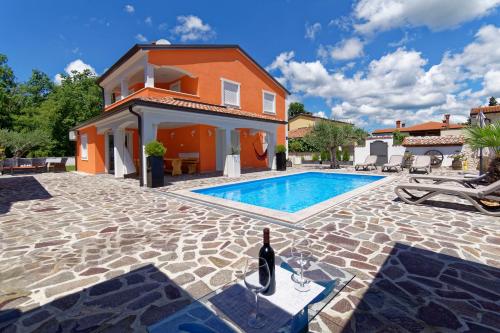


Discover Buje
Another must-visit attraction in Buje is the Church of St. Servulus, which dates back to the 6th century. The church is a beautiful example of early Christian architecture and features stunning frescoes that have been painstakingly restored over the years.
If you're a foodie, you'll love Buje's thriving culinary scene. The town is famous for its truffles, which are harvested from the nearby forests and used in a variety of local dishes. You can sample these delicacies at one of the many restaurants and cafes in the town, which offer a range of traditional Istrian cuisine.
For those who love the outdoors, Buje is a paradise. The town is surrounded by vineyards and olive groves, and you can take a leisurely bike ride or hike through the countryside to explore the scenic trails. The nearby Adriatic Sea also offers plenty of opportunities for water sports and beach activities.
Buje's Fascinating History: From Ancient Times to Modern Era
Located in the northwestern part of Croatia, Buje is a small town that has a rich and fascinating history dating back to ancient times. The town's name is derived from the Latin word "Bulla," meaning a rounded hill or a dome.
During the Roman era, Buje was an important military stronghold due to its strategic location on the Istrian peninsula. The town was also an important center for the production of olive oil and wine, which were exported to other parts of the Roman Empire. After the fall of the Roman Empire, Buje came under the rule of various conquerors, including the Byzantines, the Lombards, and the Franks.
In the Middle Ages, Buje was an important center for the production of silk and wool textiles. The town was also an important center for trade, with merchants from all over Europe coming to buy and sell goods. During this time, Buje was ruled by the Patriarch of Aquileia, and later by the Venetians, who fortified the town with walls and towers to protect against invaders.
In the 19th century, Buje became part of the Austrian Empire, and then later part of Yugoslavia after World War I. During World War II, the town was occupied by Italian and German forces, and many of its residents were killed or imprisoned. After the war, Buje became part of the Socialist Federal Republic of Yugoslavia, and then later part of the independent Republic of Croatia after the breakup of Yugoslavia.
Today, Buje is a thriving town with a population of around 5,000 people. The town is known for its beautiful architecture, including the Church of St. Servulus, which dates back to the 16th century, and the Venetian-style Palazzo Municipale. Buje is also famous for its wine and olive oil production, which has been a tradition in the town for centuries.
Italians in Croatia: Discover the Numbers
Croatia has always been a melting pot of cultures, and this is reflected in the population of Buje locality. Italians have a significant presence in this area, and their influence can be seen in the architecture, cuisine, and language of the region.
Buje is a small town located in the northwestern part of Croatia, near the border with Italy and Slovenia. According to the latest census, the population of Buje is 5,182, and out of this, 28.3% of people are of Italian ethnicity.
The Italian community in Buje has a long history. In the late 19th and early 20th centuries, many Italians migrated to this region, mainly to work in agriculture. They brought with them their traditions, language, and cuisine, which have become an integral part of the local culture.
Today, the Italian community in Buje is still present and thriving. Most of the Italians living in Buje are bilingual, speaking both Italian and Croatian. They have established cultural and social organizations that promote their heritage and traditions.
The influence of the Italian community can also be seen in the architecture of Buje. Many buildings in the town center have a distinct Italian style, with ornate facades and colorful shutters.
Finally, Italian cuisine is an essential part of the culinary scene in Buje. Many local restaurants serve Italian dishes, such as pizza, pasta, and seafood, alongside traditional Croatian cuisine.
Was Croatia Once Part of Italy? Exploring Historical Ties
Buje is a small town located in the northwestern part of Croatia, close to the border with Italy. Over the centuries, this region has been the subject of numerous political and cultural influences, including Italian dominance.
While Croatia has never been part of Italy, the two countries have a long and complex history of political and cultural connections. The region of Istria, where Buje is situated, was ruled by the Venetian Republic from the 14th to the 18th century, and Italian was the official language of the region until World War II.
During World War I, Italy and Croatia were on opposite sides, with Italy being part of the Allied powers and Croatia being part of the Austro-Hungarian Empire. After the war, Italy was granted the region of Istria as part of the Treaty of Versailles, which caused a mass exodus of ethnic Croats from the region.
After World War II, Istria was returned to Yugoslavia, and Buje became part of the newly formed Socialist Republic of Croatia. However, the Italian influence in the region remained strong, with many locals continuing to speak Italian and holding onto their Italian heritage and traditions.
Today, Buje is a vibrant town with a mix of Croatian and Italian cultures. Visitors can explore the town's historic center, which features numerous examples of Venetian and Gothic architecture, and sample local specialties such as truffles and wine.
In conclusion, Buje is an enchanting locality in Croatia that offers visitors an opportunity to explore the country's rich history and culture. With its stunning architecture, scenic landscapes, and warm Mediterranean climate, Buje is a perfect destination for tourists looking to experience the best of Croatia. From exploring the charming old town to sampling the delicious local cuisine and wines, Buje has something for everyone. So, whether you're a die-hard history buff or an adventure seeker, a visit to Buje is an experience you'll never forget.