


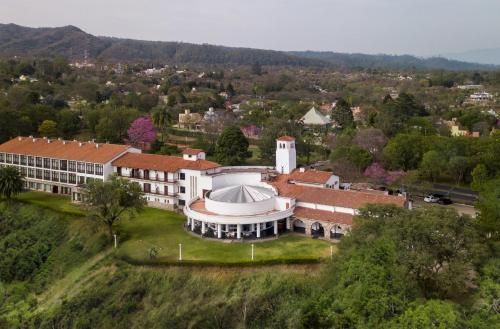



Discover San Salvador de Jujuy
One of the main attractions in San Salvador de Jujuy is the Quebrada de Humahuaca, a UNESCO World Heritage site that boasts stunning landscapes, colorful rock formations, and ancient ruins. The best way to explore this natural wonder is by taking a guided tour, where you'll learn about the history and geology of the area.
For those who love outdoor activities, San Salvador de Jujuy has plenty to offer. From hiking to horseback riding, you'll find a wide range of adventures to suit your interests. The Río Grande, which runs through the town, is a popular spot for fishing and swimming.
Finally, no trip to San Salvador de Jujuy is complete without trying some of the local cuisine. The town is famous for its empanadas, a savory pastry filled with meat, vegetables, or cheese. You'll also want to try the tamales, a traditional dish made of corn dough filled with meat or vegetables and steamed in a corn husk.
The Fascinating History of Jujuy, Argentina
San Salvador de Jujuy is the capital city of the province of Jujuy, located in the northwest region of Argentina. This city has a fascinating history that dates back to the pre-Columbian era, when the region was inhabited by different indigenous groups, such as the Omaguacas and the Incas.
During the colonial period, San Salvador de Jujuy was founded by the Spanish conquistador Francisco de Argañaraz y Murguía in 1593. The city became an important commercial center due to its strategic location on the route that connected the Viceroyalty of Peru with the Viceroyalty of the Río de la Plata.
In 1812, San Salvador de Jujuy was the scene of a historic battle that marked a turning point in the Argentine War of Independence. The Battle of Tucumán took place on September 24, 1812, when the Argentine Army, led by General Manuel Belgrano, defeated the Spanish forces led by General Pío Tristán. This victory allowed Belgrano to advance towards the north of Argentina and declare the independence of the provinces of Tucumán and Salta.
After the independence of Argentina, San Salvador de Jujuy continued to grow and develop as a cultural and economic center. In the 20th century, the city became known for its textile industry, which produced high-quality woolen fabrics and carpets. Today, San Salvador de Jujuy is a vibrant city that combines its rich history with modern amenities and attractions, such as museums, art galleries, and festivals.
If you visit San Salvador de Jujuy, you can explore its historic center, which features colonial architecture, such as the Cathedral of San Salvador, the Government House, and the Cabildo. You can also visit the Museum of Anthropology and Archaeology, which showcases the cultural heritage of the indigenous peoples of the region. Another must-see attraction is the Quebrada de Humahuaca, a stunning valley located north of San Salvador de Jujuy that has been declared a UNESCO World Heritage Site.
Language in Jujuy, Argentina: What Do They Speak?
San Salvador de Jujuy is a locality located in the northern region of Argentina. The official language spoken in Jujuy, as in the rest of Argentina, is Spanish. Spanish is spoken by the majority of the population, and it is also the official language of government, education, and business.
However, Jujuy has a rich cultural heritage, and there are other languages spoken in the region as well. The Quechua language is spoken by some indigenous communities in Jujuy, especially in the Andean region. Quechua is an indigenous language that has been spoken in the Andes for centuries, and it is still used by many people in Jujuy and other parts of South America.
Additionally, the Aymara language is also spoken by some indigenous communities in Jujuy, particularly in the Puna region. Aymara is another indigenous language that has been spoken in the Andes for centuries, and it is still used by many people in Jujuy and other parts of South America.
Despite the presence of these other languages, Spanish remains the dominant language in Jujuy. It is the primary language used in education, government, and business, and it is the language that most people use in their daily lives.
Discover San Salvador de Jujuy's Population
San Salvador de Jujuy is the capital city of the Jujuy Province in Argentina. It is located in the northwest region of the country and has a population of approximately 338,000 people. The city is situated at an altitude of 1,259 meters above sea level and covers an area of 19.2 square kilometers.
The population of San Salvador de Jujuy is a mix of indigenous people and immigrants from Spain, Italy, and other European countries. The city has a rich cultural heritage and is known for its vibrant music and dance scene, as well as its traditional crafts and textiles.
The majority of the population in San Salvador de Jujuy identifies as Roman Catholic, with a small percentage of the population following other religions like Protestantism and Judaism. The city is home to several churches and religious sites, including the Cathedral of San Salvador de Jujuy, which was built in the 17th century.
The population of San Salvador de Jujuy has grown steadily over the past few decades, with an increase of over 20% since the 1990s. The city is a hub for commerce, education, and healthcare in the region, and has attracted many people from surrounding areas who are looking for employment opportunities.
In addition to its urban population, San Salvador de Jujuy is also home to several rural communities. These communities are often made up of indigenous people who live in traditional adobe homes and rely on agriculture and livestock farming for their livelihoods.
Discover Jujuy's Size: Facts and Figures
San Salvador de Jujuy is the capital city of Jujuy province in Argentina. It is located in the northwest region of the country and has a population of approximately 278,000 people as of 2021.
The city covers an area of 19.6 square miles (50.8 square kilometers) and is situated at an altitude of 4,273 feet (1,302 meters) above sea level.
San Salvador de Jujuy is known for its rich culture and history. It was founded in 1593 by Spanish conquistador Francisco de Argañaraz y Murguía and has since become a prominent center for tourism, commerce, and industry in the region.
The city is home to several important landmarks and attractions, including the Cathedral of San Salvador de Jujuy, the Government House, and the Museum of Fine Arts.
San Salvador de Jujuy also boasts a diverse economy, with key industries including agriculture, mining, and manufacturing. The city is particularly known for its production of tobacco, sugarcane, and citrus fruits.
In conclusion, San Salvador de Jujuy is a picturesque locality in Argentina that offers a unique blend of history, culture, and natural beauty. The city's colonial architecture, lively markets, and fascinating museums attract visitors from all over the world. With its close proximity to the stunning Andes mountains, San Salvador de Jujuy serves as an excellent base for exploring the surrounding natural wonders. Whether you're interested in history, nature, or simply soaking up the local culture, San Salvador de Jujuy is a destination that should not be missed.